Our Research Approach
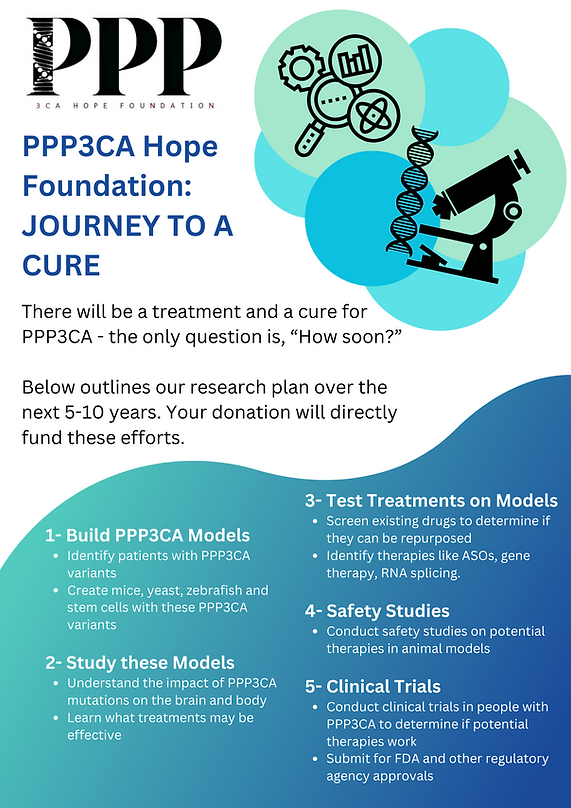
Together with our research partners, we have identified the critical first steps needed to deepen understanding of PPP3CA and move toward targeted treatments.
At the core of this work is a key question: how do specific PPP3CA variants disrupt calcineurin function and lead to disease?
To answer this, researchers are using a multi-model approach:
-
Protein-level studies:
Characterizing the structure and stability of calcineurin to understand how different PPP3CA variants alter its function -
Mouse models (in vivo):
Developing and studying mouse models carrying PPP3CA variants to observe how these changes affect brain function, neuronal signaling, and seizure activity in a living system
Patient-derived neurons (iPSCs):
Studying brain cells created from patient stem cells to better understand disease mechanisms in human neurons.
What Comes Next
Building on these findings, future research will expand into more advanced human-relevant models, including:
-
Targeted therapeutic development:
Exploring potential treatments such as antisense oligonucleotides (ASOs) and gene-based approaches aimed at correcting or modifying PPP3CA signaling
Each of these steps brings us closer to identifying precise, mechanism-based treatments for children living with PPP3CA.
Learn more about our researchers here.